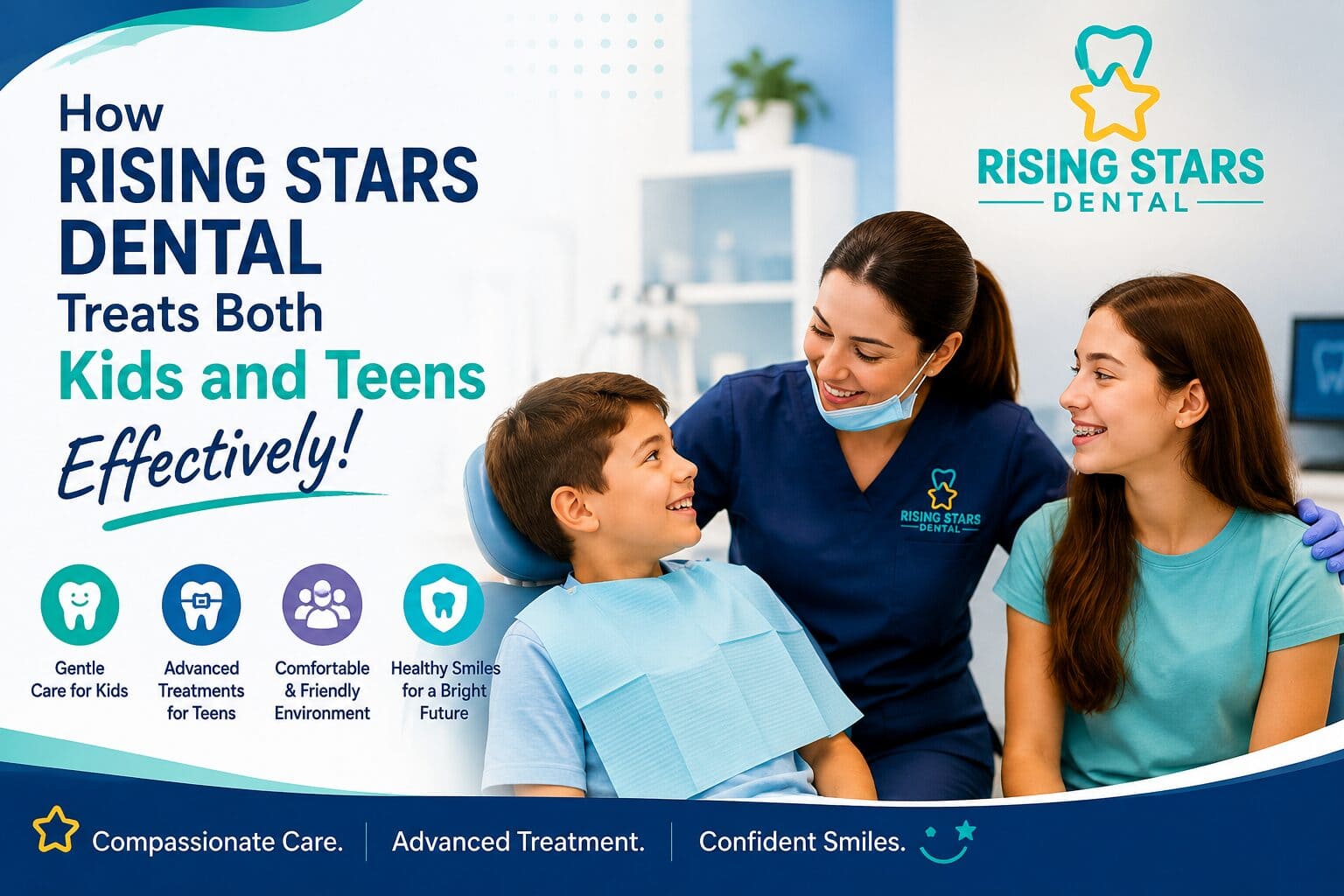
Rising Stars Pediatric Dentistry & Orthodontics combines comprehensive orthodontic care and specialized pediatric dentist expertise under one roof to treat kids and teens. Led by Drs. Nicholas Bumacod and Coco, the practice offers a seamless continuum of kids’ dental care and teen dental care as children grow. This helps families avoid changing providers during important developmental years.
This approach to family dentistry means one team tracks a child’s smile from their very first tooth all the way through the teenage years. Below, we break down exactly how Rising Stars delivers children’s dental services and adolescent care that actually fits each age group.
Why Does Dual-Specialty Care Work Better for Kids and Teens?
Dual-specialty care works better because it keeps all records, growth charts, and treatment plans in one place. This helps prevent information from being shared across different offices. From toddlerhood to the teen years, families have a more organized and stress-free experience.
Unified Records and Collaboration
At Rising Stars, orthodontists and dentists work together closely. They monitor jaw and tooth growth at the same time rather than separately. This type of teamwork allows more accurate orthodontic evaluations.
It also helps in detecting issues that might otherwise slip through the cracks between two separate practices. When dentists and orthodontists use the same charts and imaging, they can identify a growing bite problem as soon as it appears. This means they will not have to wait for a separate referral process, which might take months.
Time Savings for Busy Families
During a single office visit, parents can arrange for routine cleanings and brace adjustments. This saves time and reduces the hours missed at school or work. For busy households, this convenience can make a big difference in the duration of a treatment plan.
Long-Term Trust and Familiarity
Children who start visiting as toddlers usually stay with the same familiar team well into their teenage years. Over time, this continuity helps build genuine trust. As a result, kids are cooperative during the entire process of preventive dental care.
How Does Treatment Differ Between Kids and Teens?
Because kids and teens have different biological and emotional needs, their treatment usually seems different. For younger patients, the priority is on prevention and growth monitoring. Also, teens begin to take more responsibility for their own oral hygiene. Children’s dental needs change as they grow up. The table shows how Rising Stars changes its approach for different ages.
Feature |
Treatment for Kids |
Treatment for Teens |
| Main Focus | Prevention, healthy habits, and monitoring growth. | Aesthetic alignment, advanced restorative care, and lifestyle integration |
| Orthodontics | Early treatment, like space maintainers or Phase I interceptive braces | Full braces (customizable colors) or discreet Invisalign Clear Aligners |
| Preventive Care | Professional fluoride treatment and dental sealants | High-degree cleanings and post-orthodontic teeth whitening |
| Communication | Simple, kid-friendly terminology and interactive visual aids | Mature, direct coaching focused on self-image and hygiene ownership |
A seven-year-old and a sixteen-year-old often have very different reactions to dental care. This is why strong family dental services adapt treatment plans and communication to each stage of development.
How Does Rising Stars Support Cavity Prevention?
Rising Stars helps patients of all ages with cavity prevention by providing fluoride treatments, dental sealants, and routine dental checkups. The American Academy of Pediatric Dentistry says that children who visit the dentist regularly for preventive care are at lower risk of having untreated cavities.
Deeper cleanings and post-orthodontic teeth whitening are common types of preventive care for teens. These treatments can help them maintain the health of their smiles after braces come off. This layered approach to preventive dentistry reduces the chance of unexpected dental problems.
It can also mean fewer emergency visits during childhood and adolescence. Because the same team monitors a patient’s dental history over time, they can detect patterns that might otherwise go unnoticed. For example, they may discover that a teen is more likely to develop cavities at former bracket sites and change preventive care accordingly.
How Does Rising Stars Manage Anxiety and Pain for All Ages?

Rising Stars makes patients more comfortable by using modern technology and a variety of sedation options. These options are suited to each patient’s needs and level of comfort.
The S-Wand and Laser Dentistry
The S-Wand, often known as a “tooth thermometer,” is a computerized system that provides local anesthesia more comfortably. It uses a painless application in place of intimidating metal needles. Laser dentistry is used for precise cavity preparation and soft-tissue treatments, including frenectomies. It can help reduce postoperative bleeding and swelling and lower the need for local anesthesia.
Tiered Sedation and Sensory Distractions
The sedative options range from mild nitrous oxide for children with slight nerves to oral conscious sedation for severe anxiety. In more complex cases, supervised general anesthesia may also be available.
Overhead office televisions help to keep younger children interested during active procedures. They offer a distraction that might help make a potentially scary situation feel easier to handle. Matching the sedation level to each patient’s actual anxiety level helps create a more customized experience. During their visit, kids and teens feel listened to and supported instead of treated the same way.
FAQs
What is the best age to start taking kids to the dentist?
Children should have their first dental visit at age one, or within six months of getting their first tooth. The initial visit normally lasts about 30 to 45 minutes. During this time, the dentist examines the teeth, jaws, bite, and gums.
Why is dual-specialty care helpful for growing kids?
It maintains orthodontic and dental records in one place. Additionally, it makes it easy for providers to monitor growth and detect issues early. This also means fewer visits to juggle as a child moves from toddlerhood to teenage years.
Does Rising Stars offer sedation for anxious patients?
Yes, the practice offers a variety of sedation options to make patients more comfortable during treatment.
How often should kids and teens get dental checkups?
Every six months, most kids and teenagers benefit from a dental checkup. Regular visits help to detect potential problems early on and support good preventive care.
Can siblings of different ages be treated at the same practice?
Yes, families with children of different ages can often book appointments on the same day. This saves time and makes coordinating dental care easier.
Final Thoughts
Effectively treating kids and teens means maintaining connected records, creating age-appropriate treatment plans, preventing cavities, and handling their anxiety with care. This method helps the team grow with every patient. And it makes dental care simple and consistent. Families can stay with a single trusted team rather than switching between providers. This dual-specialty approach makes care easier by eliminating the need to change providers. It connects all stages of a child’s oral health in one place.
Rising Stars Pediatric Dentistry & Orthodontics, led by Dr. Nicholas Bumacod and Dr. Coco, is ready to help your family from the first checkup until the teen years. Schedule your consultation today to give your child a trusted dental home that will maintain their smile as they grow.

Rising Stars Pediatric Dentistry



Rising Stars Pediatric Dentistry
Gentle, Fun & Expert Pediatric Dental & Orthodontic Care
Schedule an Appointment Austin: (512) 266-7200 Marble Falls: (830) 693-7044